“Logistics is moving forward and changing at an ever-faster pace. It’s not just a matter of responding to normal market fluctuations; today, global events are also playing a significant role, changing ope rating conditions from one day to the next. It’s not enough to simply repeat what worked in the past. The
 industry is evolving, and we need to keep pace with it, taking into account everything we encounter along the way,” says Knaisl, opening the discussion.
Price Pressure and Capacity Realities
In 2025, logistics companies faced strong pressure from some clients to lower shipping rates. However, this came up against the reality that carriers’ operating costs were not falling enough to allow prices to be pushed down further.
“We’ve reached a point where volumes aren’t extreme, but capacity pressure is still strong. And if a busier season ever returns and freight volumes in Europe rise, it could be a major problem to meet demand,” explains Knaisl, adding: “That’s also why we continued to invest in the renewal, modernization, and expansion of our fleet. It was an important step to maintain the necessary capacity while meeting increasingly stringent requirements for efficiency and sustainability.”
The crisis disrupted the delicate balance
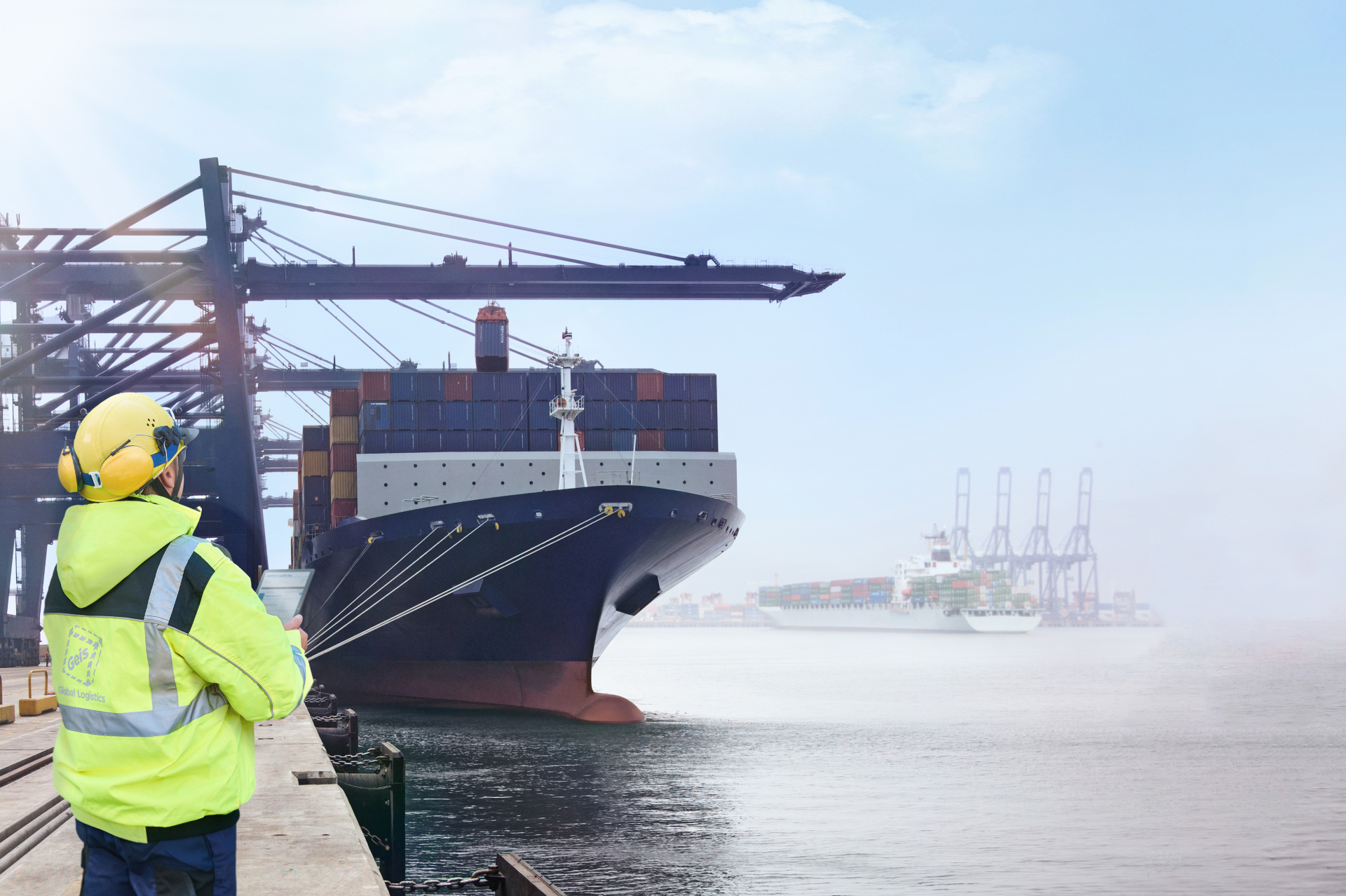
The fragile balance in the markets became even more pronounced in early March 2026. The escalation of the conflict in the Persian Gulf and the de facto closure of one of the world’s most important shipping corridors—the Strait of Hormuz—caused a sharp rise in fuel prices, extensive rerouting of maritime routes, and uncertainty in global supply chains.
However, this crisis has revealed one more thing that has not yet been discussed much: just how closely the European market remains interconnected with global energy flows. Events in the Strait of Hormuz have shown that Europe has merely exchanged one type of dependency for another. Following the curtailment of Russian supplies, it is now far more vulnerable to disruptions in maritime corridors over which it has no control. This increases not only operational uncertainty but also strategic risk, as short-term price shocks can quickly undermine both companies’ long-term plans and energy policies.
Digitalization and Data Take Center Stage
For logistics companies, changing conditions and current global events mean that, in addition to stable capacity, the ability to manage operations intelligently and predictably is becoming increasingly important—a capability that today relies primarily on technology and data. Digitalization and automation are transforming logistics, and companies cannot do without smart data. New systems enable better planning, more precise performance monitoring, and higher-quality communication with customers.
In 2025, Geis completed the full implementation of a new TMS (Transport Management System), which is a key operational tool for the logistics company. “Our TMS is the main operational tool for the entire network. Because we developed it specifically to meet our needs, we are able to effectively manage planning, operations, and the flow of information both within the company and toward customers. This, of course, translates into even greater reliability,” says Knaisl.
Electric vehicles are a reality, but not yet the mainstream standard
Last year confirmed that interest in more environmentally friendly transportation is growing, though not in leaps and bounds. Electric vehicles and HVO-powered vehicles are being introduced, and other alternatives are also being tested. However, experience shows that, for example, the electrification of heavy-duty transport is currently more of a supplement than a mainstay. The purchase costs of electric trucks remain several times higher than those of diesel vehicles, their range is not suitable for all types of routes, and the high-capacity charging infrastructure is developing slowly.


Knaisl describes the situation realistically: “Electric vehicles have potential, and we’re deploying them too. But at this point, we need to consider where they actually make sense. Development depends on the economy and political decisions. Moreover—and this is crucial—in the vast majority of cases, clients make their decisions based on the cost of transportation, which is, logically, significantly higher for the electric option. At the Geis Group, we are currently using the HVO alternative on a larger scale.”
Network and Quality: A Stable Foundation Complemented by a Modern Fleet
While alternative powertrains are developing gradually, the network structure itself already contributes significantly to overall efficiency today. A dense network of branches is a long-standing strength of Geis in the CEE region. It enables shorter pickup and delivery routes, faster response times, and consistent delivery quality. Thanks to this, new technologies and vehicle types can be introduced specifically where they truly make sense.
At a time when global routes are disrupted and some European ports are operating under increased pressure due to accumulated delays, a strong regional infrastructure is even more valuable. It allows us to respond flexibly to irregularities in international flows and minimize their impact on customers.
“The network is one of the strongest foundations of our service. If you have the infrastructure built right, it allows you to be reliable and flexible in any situation,” says Knaisl.
Sustainability According to MissionZero
The issue of decarbonization is resonating across Europe, driven both by legislation and directly by customers. The Geis Group is responding to this pressure with its own MissionZero strategy, which aims for carbon neutrality by 2040. This is not a one-time commitment, but a long-term program involving dozens of specific steps across the company. In addition to modernizing the vehicle fleet and using alternative fuels, MissionZero also includes reducing energy consumption in buildings, optimizing routes, and measuring the carbon footprint.


However, Geis views sustainability in a broader sense. In addition to environmental measures, it also focuses on social and economic pillars—employee support, workplace safety, skills development, and building a stable, long-term sustainable business. It is precisely the interconnection of these three areas that forms the basis of a strategy designed to move the group toward a lower carbon footprint while maintaining the quality and efficiency of its services.
2026: Fewer Illusions, More Strategy
This year will once again fail to bring the long-awaited stability that has been missing for six years now. On the contrary, global logistics is currently experiencing a higher degree of uncertainty caused by disrupted corridors, limited operations in the Persian Gulf region, high fuel prices, and more frequent fluctuations in European port operations. Nevertheless, opportunities are opening up for flexible companies that can quickly navigate and adapt to this complex situation. They can succeed thanks to their stability, quality, ability to react qu